
Wrought Iron Refinishing: 7 Essential Steps for Stunning Makeovers
Wrought Iron Refinishing is more than just a cosmetic upgrade; it is an essential maintenance practice, especially for properties in South Florida. The relentless sun, high humidity, and salt-laden air can quickly degrade even the most robust iron pieces, leading to rust, corrosion, and a diminished aesthetic. Restoring your outdoor furniture, gates, and railings not only enhances their beauty but also significantly extends their lifespan.
This comprehensive guide will walk you through the critical steps needed to achieve a stunning makeover for your wrought iron. We will explore everything from meticulous preparation to the best protective coatings, ensuring your pieces withstand the challenging tropical climate. Discover how a professional approach to Wrought Iron Refinishing can transform your outdoor spaces, making them both beautiful and resilient.
Key Takeaways
- Understand the critical importance of regular Wrought Iron Refinishing to combat South Florida’s harsh climate.
- Learn the 7 essential steps, from cleaning to final coating, for a durable and aesthetically pleasing finish.
- Discover the best materials and techniques for effective rust removal and surface preparation.
- Explore the differences between DIY and professional services, including powder coating, for optimal longevity.
- Gain insights into selecting the right paints and protective coatings designed for outdoor wrought iron.
Understanding Wrought Iron Refinishing: The Foundation of Durability
Wrought Iron Refinishing is a vital process for preserving the beauty and structural integrity of your iron pieces. In South Florida, where humidity and salt air are constant threats, neglecting your wrought iron can lead to rapid deterioration. Refinishing creates a protective barrier that shields the metal from environmental damage, preventing rust and extending its lifespan.
The process involves more than just applying a new coat of paint. It is a meticulous restoration that addresses existing damage, prepares the surface, and applies a durable finish. This ensures that your outdoor furniture, gates, and railings not only look stunning but also remain functional and resilient for years to come.
What is the Process of Wrought Iron Refinishing?
The comprehensive process of Wrought Iron Refinishing typically includes several key stages. It starts with thorough cleaning to remove dirt, grime, and loose paint. This is followed by meticulous rust removal and surface preparation, which might involve sanding, wire brushing, or even sandblasting. After preparation, a rust-inhibiting primer is applied to ensure adhesion and corrosion resistance.
Finally, multiple coats of high-quality, weather-resistant paint or a specialized coating are applied, followed by adequate curing time. Each step is crucial for achieving a lasting, beautiful finish that can withstand the elements. Understanding these stages is the first step toward a successful restoration.
Preparing for Wrought Iron Refinishing: The Crucial First Steps
Proper preparation is the cornerstone of any successful Wrought Iron Refinishing project. Without a clean, smooth, and rust-free surface, even the best paints will fail prematurely. This phase demands patience and attention to detail, as it directly impacts the longevity and appearance of your refinished items.
Ignoring this stage can lead to bubbling, peeling, and a short-lived finish, forcing you to repeat the process sooner than necessary. Investing time in preparation will save you significant effort and cost in the long run, especially in a challenging climate like South Florida.
How to Properly Prepare for Wrought Iron Refinishing
The initial step for proper preparation involves a thorough cleaning. Use a degreaser and a stiff brush to remove all dirt, grease, and mildew. Rinse thoroughly and allow the piece to dry completely. Next, focus on rust removal. Any existing rust must be completely eliminated to prevent it from spreading under the new coating.
Methods for rust removal include wire brushing, sanding with various grits of sandpaper, or using a rust converter. For severely rusted items, sandblasting is often the most effective method, especially for intricate designs. Once rust is gone, sand the entire surface to create a profile for paint adhesion. The surface must be clean, dry, and free of any debris or oils before priming. This meticulous preparation is critical for maximum adhesion and longevity of your Wrought Iron Refinishing.
The 7 Essential Steps for Wrought Iron Refinishing
Achieving a professional-grade finish for your wrought iron requires a systematic approach. These seven steps outline a comprehensive strategy for effective Wrought Iron Refinishing, ensuring durability and aesthetic appeal. Each stage builds upon the last, contributing to a resilient coating that can endure South Florida’s demanding environment.
Following these steps diligently will not only restore your wrought iron but also protect your investment. Whether you are tackling a small piece of furniture or a large gate, these guidelines provide a clear path to stunning results.
Step 1: Thorough Cleaning for Wrought Iron Refinishing
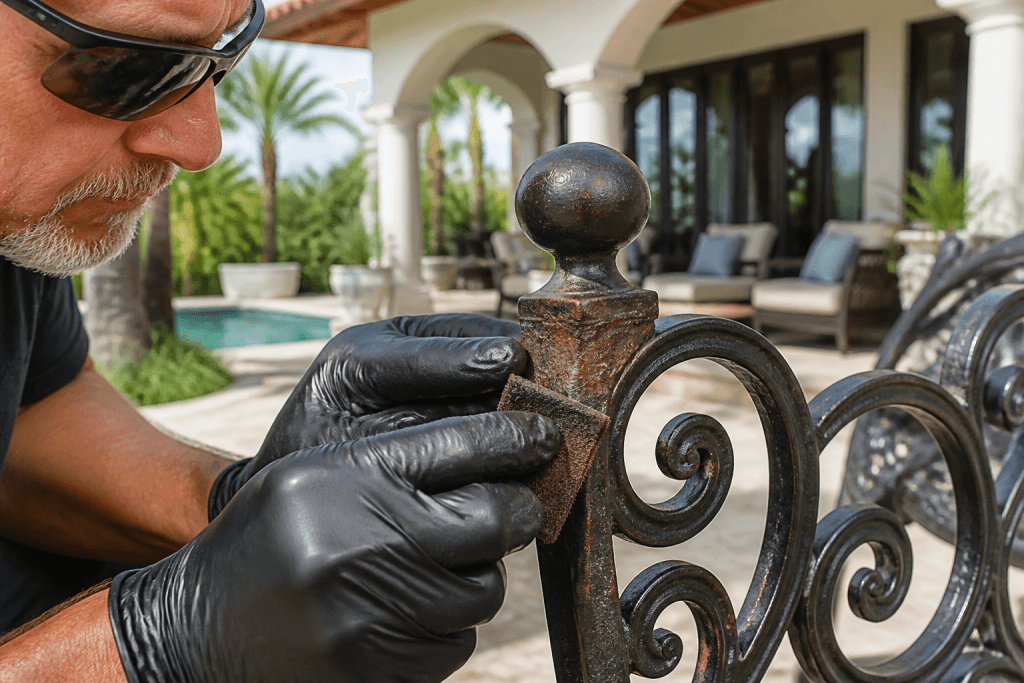
Begin by cleaning your wrought iron thoroughly. Use a strong detergent or a specialized metal cleaner to remove all dirt, grime, and loose paint flakes. A pressure washer can be highly effective for larger items like fences or gates, but ensure you allow ample drying time afterward. For smaller pieces, a scrub brush and warm soapy water will suffice. This initial cleaning is crucial for exposing any underlying rust or damage.
Step 2: Rust Removal – Key to Lasting Wrought Iron Refinishing
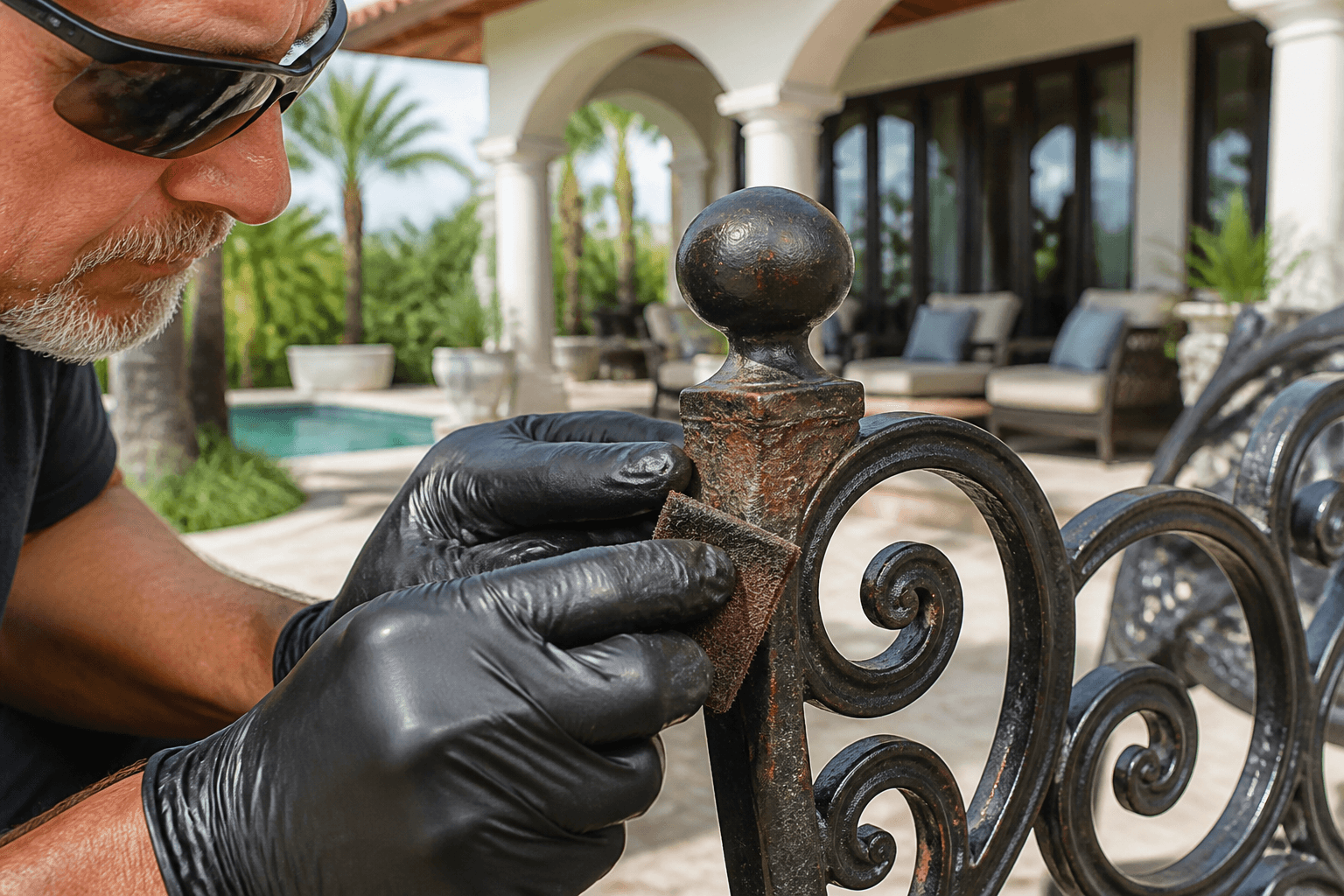
This is perhaps the most critical step. All rust must be removed. For light rust, a wire brush, sandpaper (80-120 grit), or steel wool can be used. For heavier rust, consider using a grinder with a wire wheel attachment or an orbital sander. Chemical rust removers can also be effective but require careful handling and proper ventilation. Ensure the surface is completely smooth and free of any orange or brown discoloration.
Step 3: Surface Preparation and Smoothing
After rust removal, sand the entire surface with finer grit sandpaper (180-220 grit) to create a smooth, even texture. This step helps the primer adhere better and ensures a flawless final finish. Wipe down the piece with a tack cloth or a clean, damp cloth to remove all sanding dust and debris. The surface must be perfectly clean and dry before moving on.
Step 4: Applying a High-Quality Primer
A rust-inhibiting primer is non-negotiable for outdoor wrought iron, especially in humid climates. Apply one to two even coats of an epoxy or oil-based metal primer. This layer provides an essential barrier against future rust and improves the adhesion of your topcoat. Allow each coat to dry completely according to the manufacturer’s instructions before proceeding.
Step 5: Selecting and Applying the Topcoat for Wrought Iron Refinishing
Choose a paint specifically designed for exterior metal, such as an oil-based enamel, acrylic latex exterior paint, or specialized direct-to-metal (DTM) paint. These paints offer superior durability and weather resistance. Apply two to three thin, even coats, allowing sufficient drying time between each. Spray painting often yields the smoothest finish, especially for intricate designs.
Step 6: Curing and Drying
Patience is key during the curing process. While the paint may feel dry to the touch within hours, it takes several days, or even weeks, for the paint to fully cure and achieve its maximum hardness and durability. Avoid heavy use or exposure to harsh conditions during this period. This ensures the longevity of your Wrought Iron Refinishing.
Step 7: Optional Clear Coat for Enhanced Protection
For an extra layer of protection and a deeper sheen, consider applying a clear, UV-resistant topcoat. This is particularly beneficial in South Florida’s intense sun, as it helps prevent fading and adds an additional barrier against moisture. Ensure the clear coat is compatible with your chosen paint type.
Professional Wrought Iron Refinishing vs. DIY: Making the Right Choice
Deciding between a DIY approach and professional services for Wrought Iron Refinishing depends on several factors, including the size and complexity of the project, your skill level, and your desired longevity. While DIY can be cost-effective for small items, larger or more intricate pieces often benefit immensely from expert intervention.
Professional services offer specialized equipment and expertise that can deliver superior results, especially when dealing with extensive rust or difficult-to-reach areas. They can also provide advanced coating options like powder coating, which significantly outperforms traditional paint in terms of durability and finish quality.
What Materials and Tools Are Needed for DIY Wrought Iron Refinishing?
For a DIY project, you will need a wire brush, sandpaper (various grits), a degreaser, rust remover or converter, a metal primer, exterior metal paint, and brushes or a spray gun. Safety gear, including gloves, eye protection, and a respirator, is also crucial. For larger items, power tools like an orbital sander or angle grinder with wire wheel attachments can speed up the process. A drop cloth is essential to protect your work area.
Where Can I Find Professional Wrought Iron Refinishing Services?
For professional Wrought Iron Refinishing services, look for local outdoor living specialists or metal restoration experts in your area. Companies like Beach & Patio Outdoor Living in Pompano Beach, FL, offer comprehensive refinishing services for a wide range of wrought iron furniture and fixtures. They leverage specialized techniques and high-quality materials to ensure superior, long-lasting results tailored to the South Florida environment. You can explore their offerings at Beach & Patio Outdoor Living.
How Much Does It Cost to Refinish a Wrought Iron Fence?
The cost to refinish a wrought iron fence varies widely based on its size, condition, and the chosen method. DIY costs will primarily be for materials (paint, primer, tools), ranging from a few hundred dollars for a small fence. Professional refinishing, especially with sandblasting and powder coating, can range from $5 to $15 per linear foot or more, depending on the complexity and local labor rates. It’s best to get several quotes for accurate pricing.
What Kind of Paint or Coating Is Best for Outdoor Wrought Iron?
For outdoor wrought iron, specialized metal paints or powder coatings designed for exterior use are best. Rust-inhibiting primers are mandatory. Topcoats should be durable and weather-resistant, such as epoxy, acrylic, or urethane-based paints. Powder coating offers exceptional durability, chip resistance, and a wider range of finishes, providing superior protection against UV damage and corrosion. It is often considered the gold standard for longevity.
Do I Need to Remove All Rust Before Refinishing Wrought Iron?
Yes, it is absolutely crucial to remove all rust before starting Wrought Iron Refinishing. Any remaining rust will continue to spread underneath new paint or coatings, leading to bubbling, peeling, and premature failure of the finish. Thorough rust removal ensures maximum adhesion and long-term protection for your wrought iron pieces. This step cannot be overstated for its importance.
Ready for Professional Wrought Iron Refinishing?
Ensure your wrought iron pieces withstand the South Florida elements and look stunning. Beach & Patio Outdoor Living offers expert refinishing services.
Maintaining Your Refinished Wrought Iron for Lasting Beauty
Once your wrought iron pieces have undergone Wrought Iron Refinishing, ongoing maintenance is key to preserving their renewed beauty and protective qualities. Regular care can significantly extend the life of the finish, preventing the early onset of rust and wear, especially in the demanding South Florida climate. Simple routine checks and minor touch-ups can make a big difference.
This proactive approach ensures your investment continues to enhance your outdoor living spaces for many years. Neglecting maintenance, even after a professional refinish, can lead to premature deterioration, requiring another full restoration sooner than anticipated.
How Often Should Wrought Iron Furniture Be Refinished?
The frequency of Wrought Iron Refinishing depends on the climate, exposure to elements, and the quality of the initial coating. In harsh environments like South Florida, it is generally recommended to inspect your wrought iron annually and consider refinishing every 3-5 years for painted surfaces. Professionally powder-coated pieces can last 10-20 years or more, but regular checks for chips or scratches are still essential. Prompt touch-ups can prevent minor issues from becoming major problems.
What are the Common Challenges When Refinishing Old Wrought Iron Pieces?
Refinishing old wrought iron pieces often presents several challenges. These include extensive rust, layers of old paint that are difficult to remove, intricate designs that make surface preparation tedious, and structural damage like bent or broken components. Proper rust removal is paramount, as is ensuring a smooth surface for new coatings. For very old or heavily damaged pieces, professional restoration might be the most practical and effective solution.
What is the Difference Between Painting and Powder Coating Wrought Iron for Refinishing?
Painting wrought iron involves applying liquid paint in multiple layers, offering versatility in color and finish. It can be a DIY option. Powder coating, however, uses a dry powder that is electrostatically applied and then cured under heat, forming a much thicker, more durable, and chip-resistant finish. While painting is accessible, powder coating typically requires professional equipment for superior longevity and protection during Wrought Iron Refinishing. Powder coating provides a more robust barrier against the elements.
How Long Does Professional Wrought Iron Refinishing Last?
Professional Wrought Iron Refinishing, especially when utilizing high-quality powder coating and expert surface preparation, can last significantly longer than typical DIY paint jobs. You can expect a professionally refinished wrought iron piece to maintain its beauty and protective qualities for 10-20 years or even more, depending on environmental exposure and ongoing care. This longevity makes professional services a worthwhile investment for enduring quality.
The longevity of your wrought iron pieces in South Florida hinges on effective Wrought Iron Refinishing. By understanding the process, choosing the right materials, and either committing to meticulous DIY work or investing in professional services, you can ensure your outdoor elements remain beautiful and resilient. Regular maintenance after refinishing further guarantees their enduring appeal and protection against the harsh tropical climate.
What is the process of wrought iron refinishing?
Wrought iron refinishing involves several key stages: thorough cleaning to remove dirt and grime, meticulous rust removal and surface preparation (sanding, wire brushing), priming to ensure paint adhesion and corrosion resistance, applying multiple coats of high-quality paint or a specialized coating, and finally, allowing adequate curing time for durability. Each step is vital for a lasting, beautiful finish.
How do you properly prepare wrought iron for refinishing?
Proper preparation for wrought iron refinishing begins with a degreaser wash, followed by abrasive methods like wire brushing, sanding, or even sandblasting to remove all loose paint, rust, and corrosion. Ensure the surface is completely clean, dry, and free of any debris or oils before applying any primers or coatings. This meticulous preparation is critical for adhesion and longevity.
Why is it important to refinish wrought iron regularly?
Regular wrought iron refinishing is essential to protect the metal from rust, corrosion, and environmental damage, especially in humid climates like South Florida. Refinishing extends the lifespan of your outdoor furniture and fixtures, preserves their aesthetic appeal, and prevents costly repairs or replacements by maintaining a strong protective barrier against the elements.
Where can I find professional wrought iron refinishing services?
For professional wrought iron refinishing services, look for local outdoor living specialists or metal restoration experts in your area. Beach & Patio Outdoor Living in Pompano Beach, FL, offers comprehensive refinishing services for a wide range of wrought iron furniture and fixtures, ensuring high-quality results tailored to the South Florida environment.
What kind of paint or coating is best for outdoor wrought iron?
For outdoor wrought iron, specialized metal paints or powder coatings designed for exterior use are best. Opt for rust-inhibiting primers followed by durable, weather-resistant topcoats like epoxy, acrylic, or urethane-based paints. Powder coating offers exceptional durability and a wider range of finishes, providing superior protection against chips, scratches, and UV damage.
Do I need to remove all rust before refinishing wrought iron?
Yes, it is absolutely crucial to remove all rust before starting wrought iron refinishing. Any remaining rust can continue to spread underneath new paint or coatings, leading to bubbling, peeling, and premature failure of the finish. Thorough rust removal ensures maximum adhesion and long-term protection for your wrought iron pieces.
How often should wrought iron furniture be refinished?
The frequency of wrought iron refinishing depends on the climate, exposure to elements, and initial coating quality. In harsh environments like South Florida, it’s generally recommended to inspect your wrought iron annually and consider refinishing every 3-5 years. Well-maintained, professionally powder-coated pieces might last longer, but regular checks are key.
What is the difference between painting and powder coating wrought iron for refinishing?
Painting wrought iron involves applying liquid paint in multiple layers, offering versatility in color and finish. Powder coating, however, uses a dry powder that is electrostatically applied and then cured under heat, forming a much thicker, more durable, and chip-resistant finish. While painting can be a DIY option, powder coating typically requires professional equipment for superior longevity and protection during wrought iron refinishing.
How long does professional wrought iron refinishing last?
Professional wrought iron refinishing, especially using high-quality powder coating and expert surface preparation, can last significantly longer than DIY paint jobs. You can expect a professionally refinished wrought iron piece to maintain its beauty and protective qualities for 10-20 years or even more, depending on environmental exposure and ongoing care.
Learn more from authoritative resources: Consumer Reports and HGTV.